

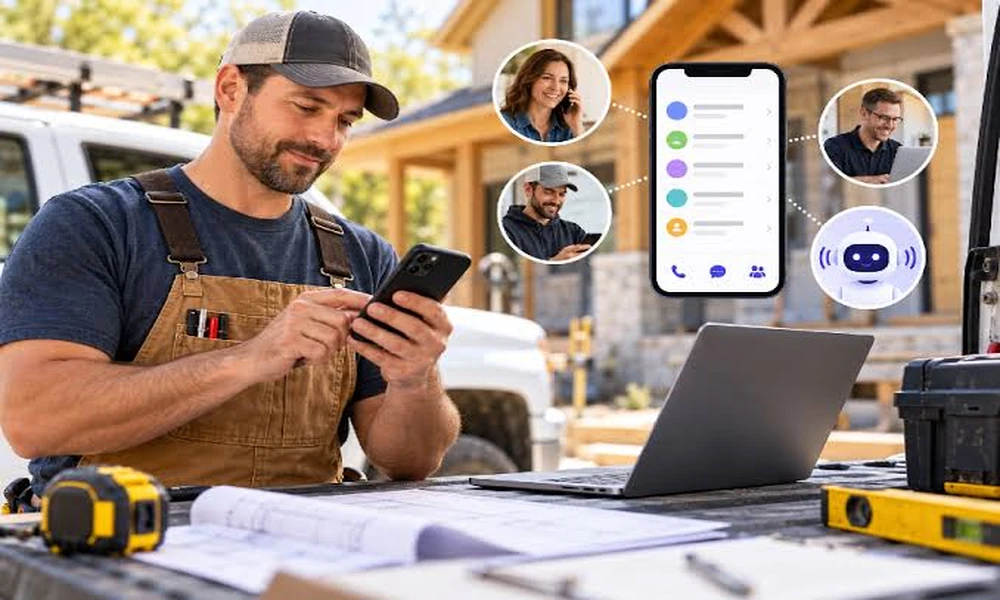
A homeowner with a leaking pipe or a failed air conditioner does not want to read a company history. They want to know three things quickly: can this contractor help, do they serve my area, and how do I reach them right now? A well-built contractor website answers all three within seconds.
What Makes a Contractor Website Different From Other Business Websites?
A contractor website exists to start conversations. Most visitors arrive from a phone, in a hurry, and with a specific problem. That changes how the site should be designed.
Where a consulting firm might invite visitors to read case studies for several minutes, a contractor wants the visitor to tap a button and call. Every design choice, from header layout to page speed, should support that single behavior. This is the core idea behind effective home service website design: reduce friction between the problem and the phone.
Why Should the Phone Number Be Impossible to Miss?
The phone number belongs at the top of every page, large enough to read without squinting and set up as a click-to-call link on mobile devices. A sticky header or floating call button that follows the visitor as they scroll keeps the option visible at all times.
Do not hide contact details in a footer or a separate page. If a visitor has to search for a way to reach you, many will simply return to the search results and choose a competitor. Consider adding a short line beside the number that sets expectations, such as when calls are answered or whether emergency service is available.
How Should Service Pages Be Organized?
One generic “Services” page cannot rank well or persuade well. Each major service deserves its own page with a clear purpose. A roofing company, for example, might build separate pages for roof repair, roof replacement, storm damage, and inspections.
Each service page should cover:
- A plain description of the work and when a homeowner needs it.
- The typical process from first call to finished job.
- Materials, brands, or methods the contractor prefers and why.
- Photos of completed work in that category.
- A visible call button and a short estimate request form.
This structure helps search engines understand what the business offers and helps visitors confirm they have found the right solution.
Do Service Area Pages Really Help?
Yes. Homeowners search by location, and search engines match results to the place a person is searching from. Dedicated service area pages let a contractor speak to specific cities or neighborhoods without cramming everything onto the homepage.
To avoid thin, repetitive content, each area page should include genuine local details. Mention neighborhoods, common housing styles, local permit considerations, or regional weather concerns that affect the work. Add a photo of a project completed in that area when possible. Pages that feel written for a real community perform better than pages that swap only the city name.
Which Trust Signals Convince Visitors to Call?
Choosing a contractor means letting a stranger into your home or onto your property. Trust is the deciding factor, so the site must prove reliability quickly. Effective trust signals include:
- License numbers and proof of insurance displayed clearly.
- Real customer reviews pulled from trusted platforms.
- Photos of the actual crew, vehicles, and uniforms.
- Warranty or guarantee language written in plain terms.
- Membership badges from trade associations and manufacturer certifications.
Stock photography weakens credibility. Visitors can often tell when a smiling crew in the image is not the one that will show up at their door. Real photos, even simple ones, feel more honest and convert better.
What Should a Request a Quote Form Look Like?
A quote form should be short. Ask for the information needed to begin: name, phone number, service needed, and a brief description of the problem. Long forms discourage people who are already stressed.
Place the form above the fold on service pages and repeat it near the end of the page. After submission, show a confirmation message that explains what happens next, such as when someone will call back. Responding quickly to form submissions is just as important as having the form, because homeowners often contact more than one contractor at the same time.
How Does a Project Gallery Build Confidence?
Before-and-after photos show results in a way that text cannot. A gallery organized by service type lets visitors see work similar to their own situation. Short captions that describe the problem, the solution, and the location add context and also give search engines more relevant text to read.
Keep images compressed so the gallery loads quickly. A beautiful gallery that takes too long to appear on a phone defeats its own purpose.
Why Do Mobile Experience and Page Speed Matter So Much?
Most contractor searches happen on phones, often while the person is standing in the affected room. A mobile friendly website must load fast, display text at a readable size, and offer buttons large enough for a thumb to tap accurately.
Test the site on a real phone, not just a resized desktop window. Look for pop-ups that block content, menus that are hard to open, and forms that are tedious to complete. Fast hosting, optimized images, and clean code all contribute to speed. Search engines also consider page experience when ranking local results, so technical quality supports visibility as well as conversions.
How Can Content Support a Contractor Website Beyond the Main Pages?
Helpful articles attract people who are still researching. A plumber might explain how to tell whether a water heater needs repair or replacement. An electrician might describe warning signs of an overloaded panel. These topics answer real questions, build authority, and introduce the company to future customers before an emergency happens.
Write in everyday language, give a direct answer near the top of the page, and finish with a clear next step. This format also works well for voice search and answer engines that favor concise, trustworthy explanations.
What Local Signals Should the Website Reinforce?
The website should match the information shown on the Google Business Profile and directory listings. Use the same business name, address, and phone number everywhere. Embed a map on the contact page, list service areas clearly, and add local business schema markup so search engines can read the details accurately.
Consistency across the web reassures both people and algorithms that the business is established and dependable.
What Mistakes Cause a Contractor Website to Lose Calls?
- Burying the phone number or using a contact form as the only option.
- Using vague headlines that do not say what service is offered or where.
- Filling the homepage with slideshows that slow loading.
- Skipping reviews, licenses, and photos of real work.
- Ignoring analytics, so there is no way to learn which pages produce calls.
Avoiding these problems usually produces more improvement than any new design trend.
Final Thoughts on Building a Contractor Website That Works
It is a hot afternoon and the air conditioning has just quit. A homeowner in Escondido taps your listing, and within seconds she sees your number, your service area, and a few real reviews. She calls. Every recommendation above exists to create that moment. If you want help building it, explore website design services or learn about home services marketing across San Diego County.


